

➜ Split Rail Fencing
SPLIT RAIL FENCING IN Decatur, GA.
Open land deserves an open boundary. Lindley's Fencing installs split rail across Decatur, GA for acreage, paddocks, driveways, and garden borders, marking the line clearly while leaving the landscape exactly as you like to see it.
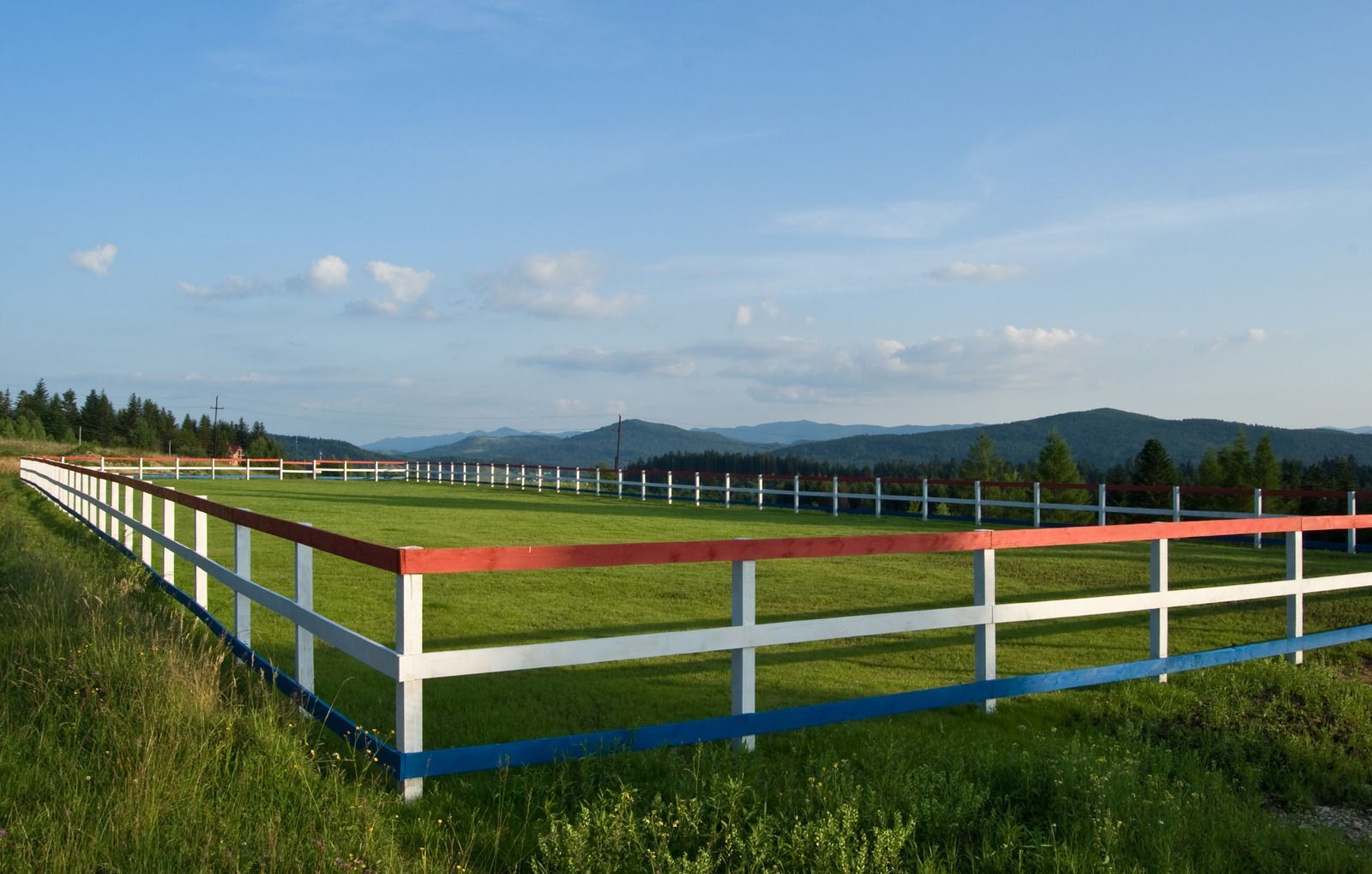
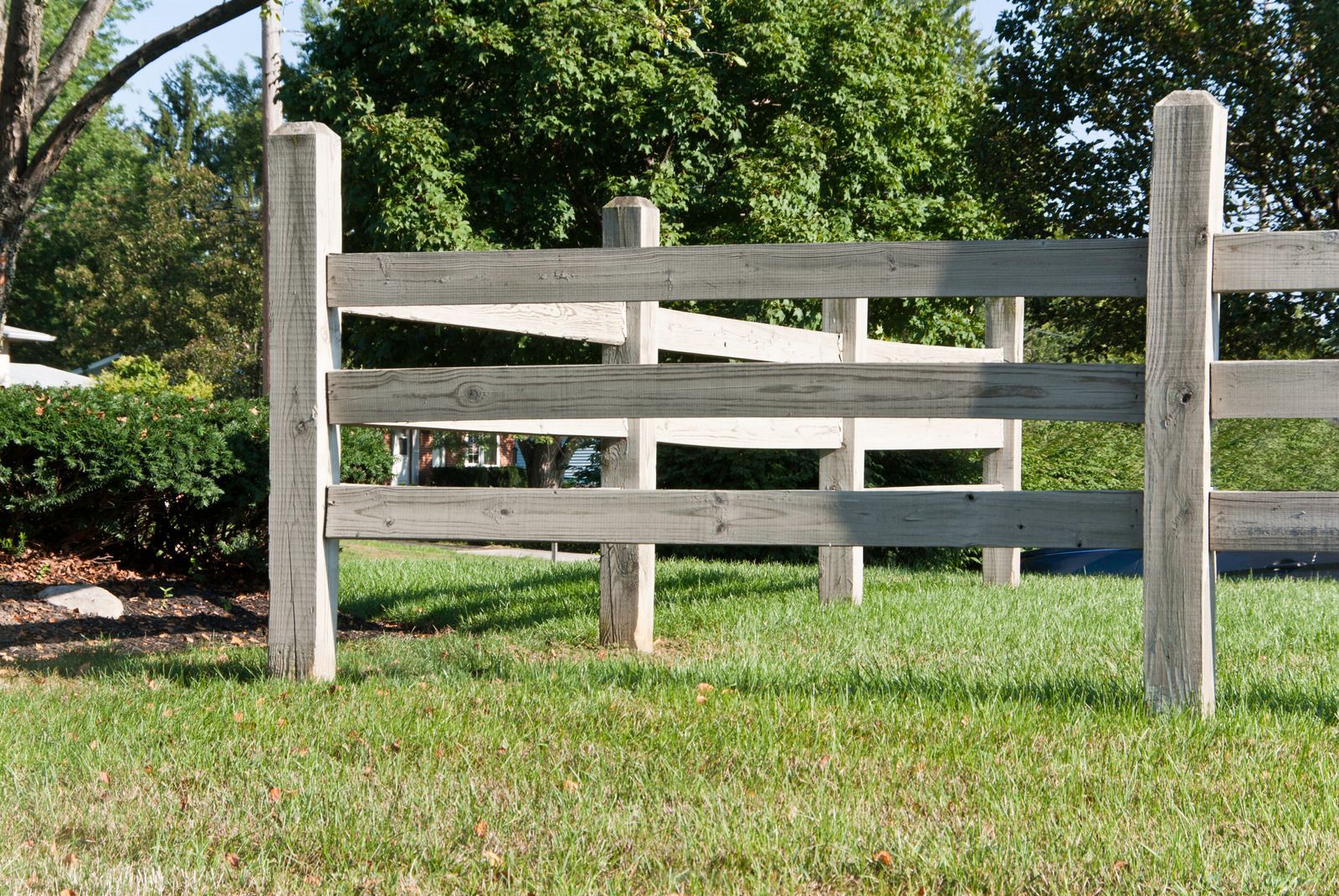
THE SIMPLEST FENCE IS OFTEN THE RIGHT ONE.
Split rail asks very little and delivers a lot. Posts, rails, and nothing else: no panels to warp, no pickets to replace, no finish demanding attention every few years. It defines a property, guides traffic away from planting, and covers long distances economically, all while looking as though it grew out of the ground it stands in.
Where containment matters, wire mesh can be added behind the rails without spoiling the rustic character from the road.
- Two-rail and three-rail options
- Cedar and treated timber
- Optional wire mesh backing
- Free estimate on long runs
➜ SPLIT RAIL FENCING
LONG RUNS, LOW FUSS, LASTING CHARACTER.
Fencing a large boundary is where split rail proves itself. Post spacing is set by the rail length rather than by panel sizes, so a considerable distance can be enclosed for a fraction of what solid fencing costs, and the installation goes in quickly. The look works equally well along a wooded lot line, either side of a gravel drive, or around a paddock, and it ages into a soft weathered tone that most owners come to prefer.
RURAL EDGES AND WOODED LOTS.
Properties on the outskirts of the Atlanta, Georgia metro often carry the kind of ground that solid fencing struggles with: long boundaries, mature trees, uneven grade, and roots that make uniform post spacing impossible. Split rail copes with all of it, because the rails tolerate a certain amount of variation and the fence follows the land rather than fighting it. We also plan the layout around drainage, since standing water at a post base shortens the life of any timber fence.
30 YEARS OF FENCING LARGE BOUNDARIES.
Long runs demand different judgment from a back yard. Where to brace, how to handle a corner under tension, when to shorten a bay for a root or a rock, and how to keep a line looking straight across 500 feet of rolling ground. Setting rail fence since 1992 has given us that eye, and it shows most on the properties where there is nothing to hide behind. Shall we walk your boundary?
WHAT SPLIT RAIL DELIVERS
A BOUNDARY WITHOUT A BARRIER
The property line becomes unmistakable while the view across it stays completely open. For anyone who bought land for the outlook, that combination is the entire argument for this style.
ECONOMY ACROSS LONG DISTANCES
Fewer components and quicker installation make split rail one of the most affordable ways to enclose acreage. The saving grows with every additional 100 feet of boundary you need to cover.
A NATURAL FIT ON OPEN GROUND
Timber rails sit comfortably against trees, pasture, and gravel drives in a way manufactured materials rarely manage. The fence looks settled almost immediately rather than newly imposed on the landscape.
SIMPLE TO EXTEND OR REPAIR
Rails slide into mortised posts, so a damaged length is swapped out in minutes and an extension is simply more of the same. Very little about this system requires specialist attention later.
CONTAINMENT WHEN YOU NEED IT
Adding welded or woven mesh behind the rails turns an open boundary into a working one for dogs, poultry, or livestock, without changing how the fence reads from the road.
GROUND FOLLOWED WITHOUT DRAMA
Rolling and uneven land is handled naturally, since each bay can sit at its own angle. There is no stepping, no awkward triangular gap, and no fighting the contour of the site.
➜ WHAT WE INSTALL
OUR SPLIT RAIL FENCING WORK
Runs from a short driveway border to several hundred feet of boundary, in the rail configuration and timber that suits the job and the ground it crosses.
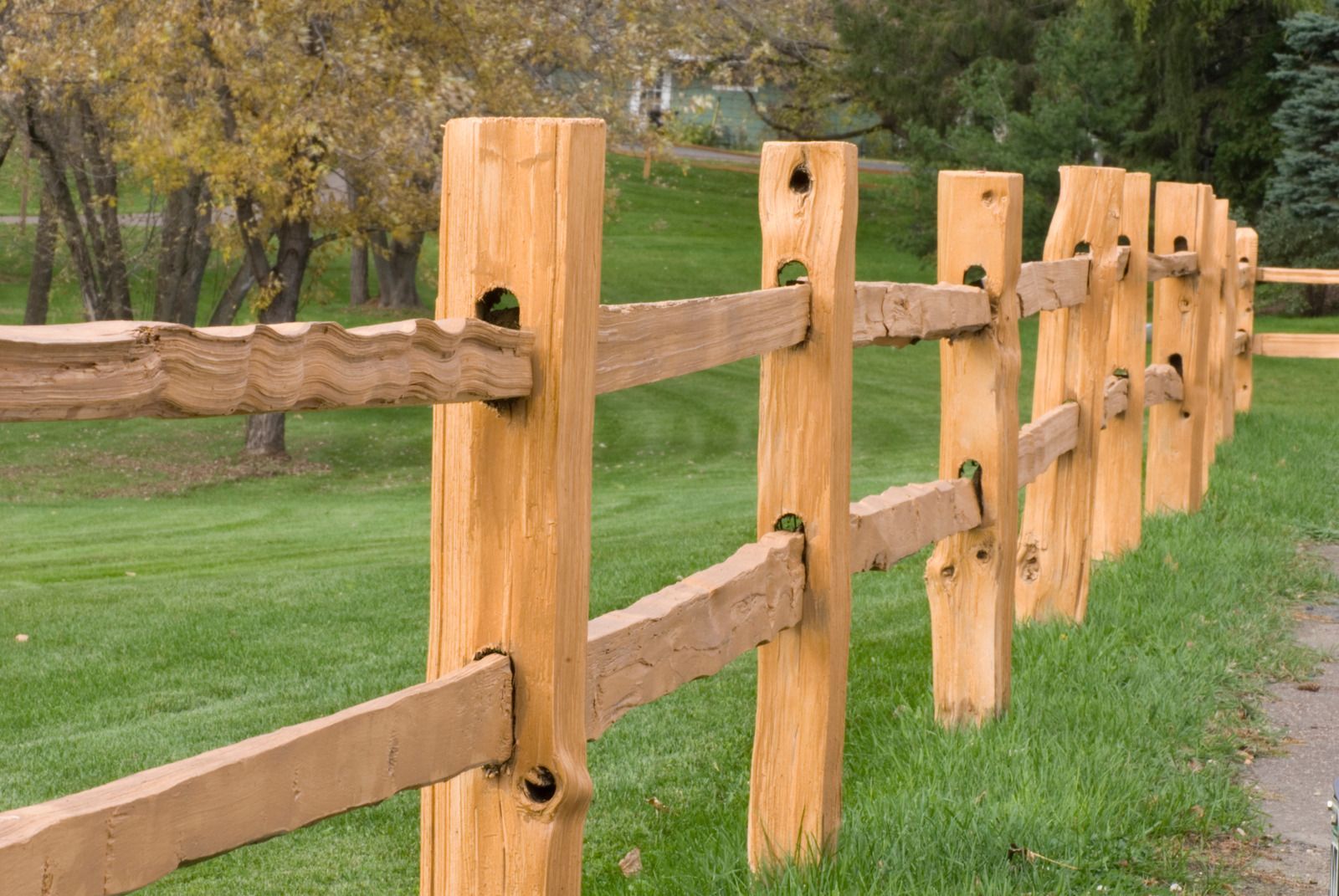
OPEN LOOK
Two-Rail Split Rail Fencing
The lower, lighter configuration, ideal for defining driveways, garden edges, and property corners without obstructing the view. Quick to install and the most economical option across a long boundary.
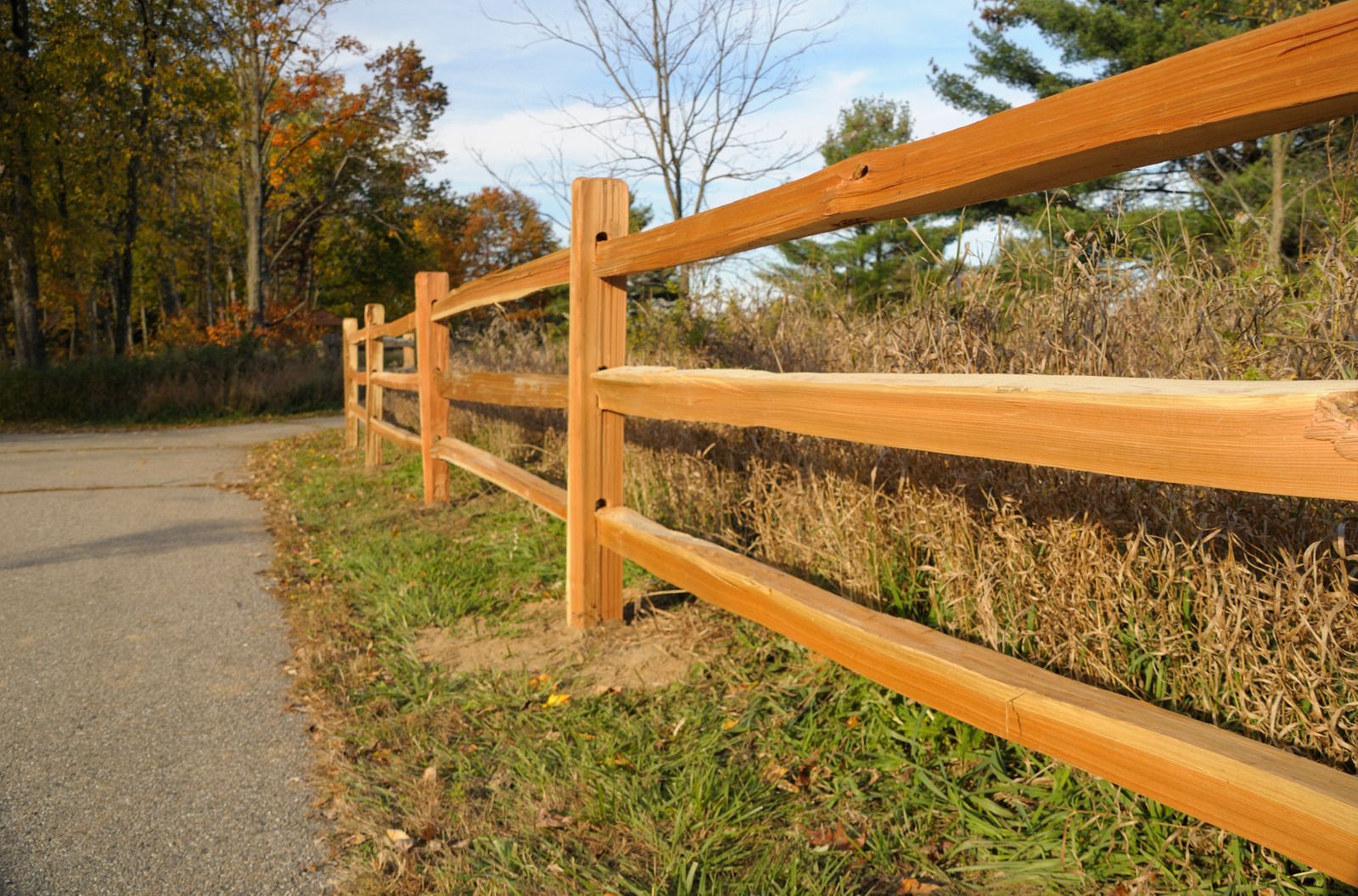
MORE STRUCTURE
Three-Rail Split Rail Fencing
An extra rail adds height, visual weight, and better containment for larger animals. The usual specification for paddocks and for boundaries where the fence needs a stronger presence.
BETTER TIMBER
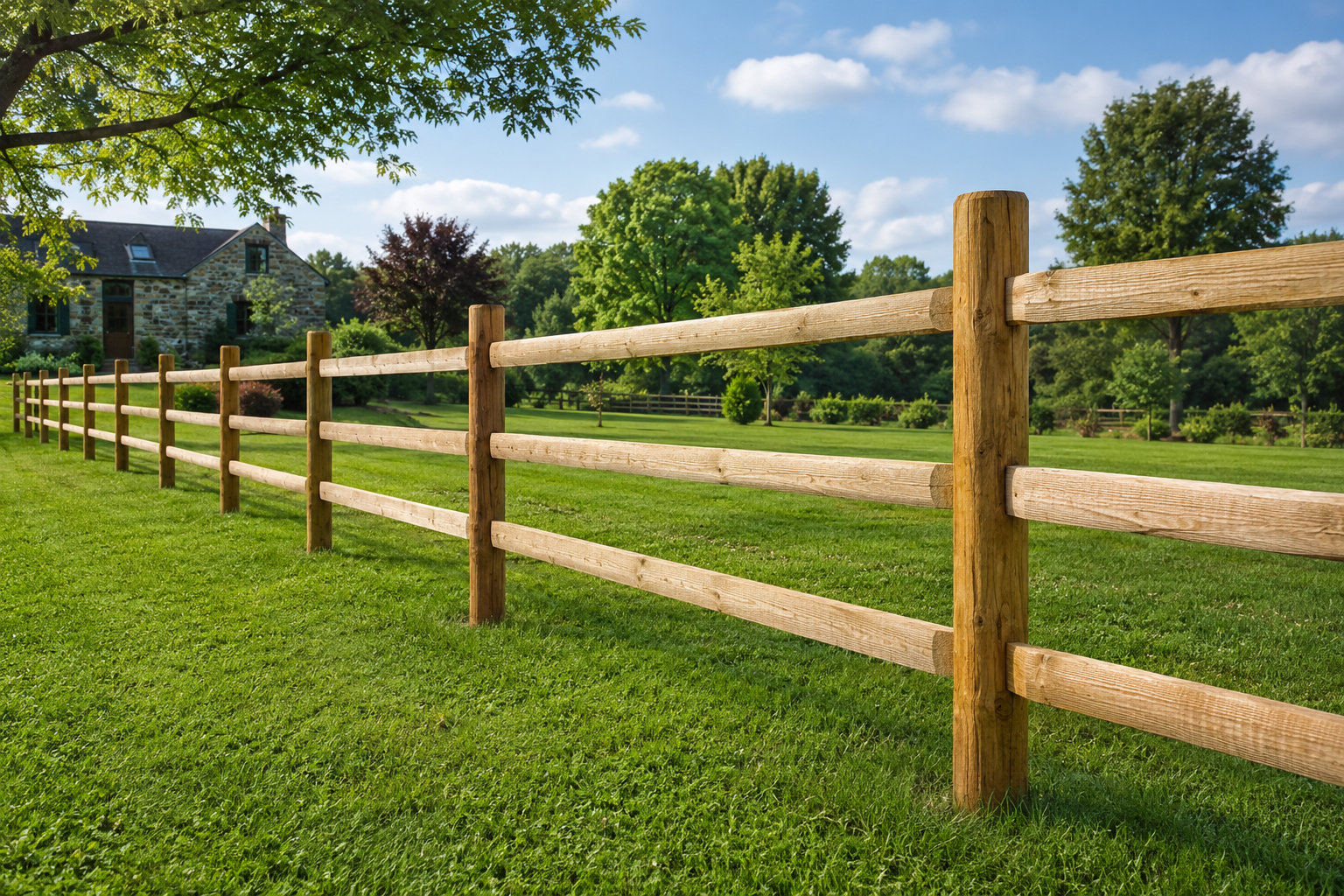
Cedar and Locust Rail Fencing
Naturally durable species that resist rot and insects without chemical treatment. Worth the upgrade on a prominent boundary, since both weather to a particularly attractive silver-gray tone.
KEEPING THEM IN
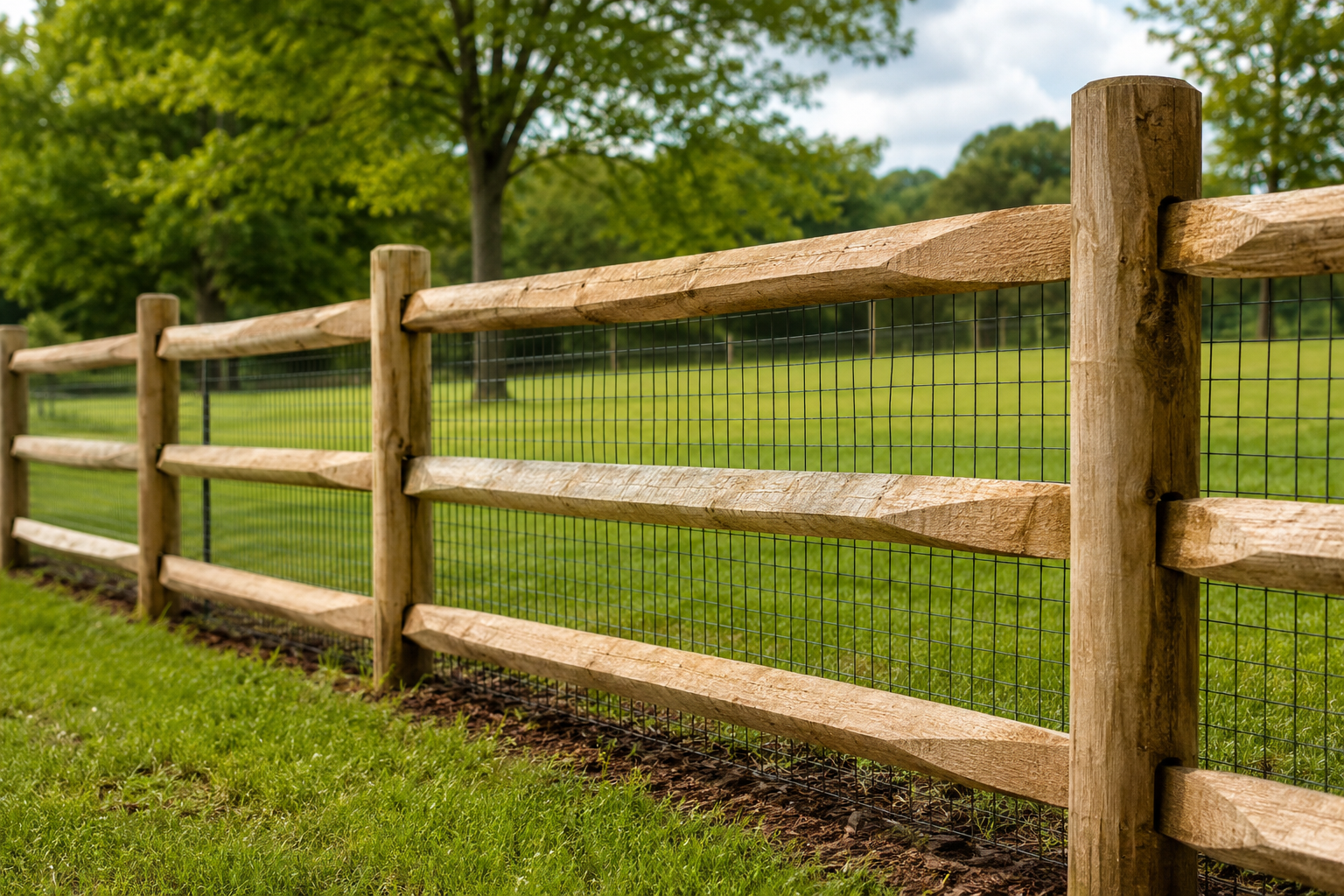
Wire-Mesh-Backed Split Rail
Welded or woven wire fixed to the inside face, invisible from a distance but entirely effective at containing dogs, poultry, and smaller livestock that would otherwise walk straight through.
ACCESS POINTS
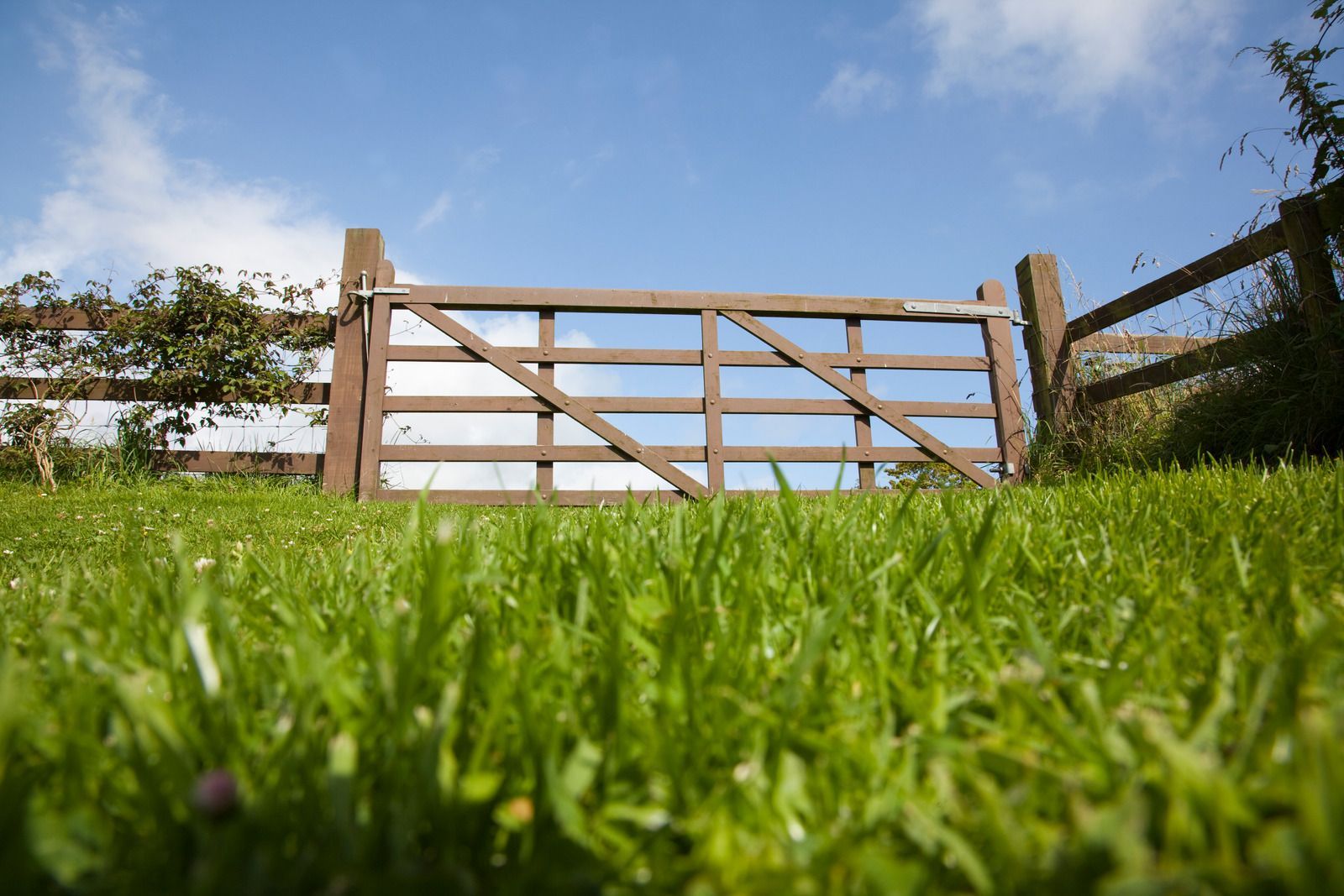
Split Rail Gates
Matching timber gates for drives, paddocks, and footpaths, hung on braced posts sized for the span. Widths are set by what needs to pass through, including trailers and farm equipment.
BIG ACREAGE
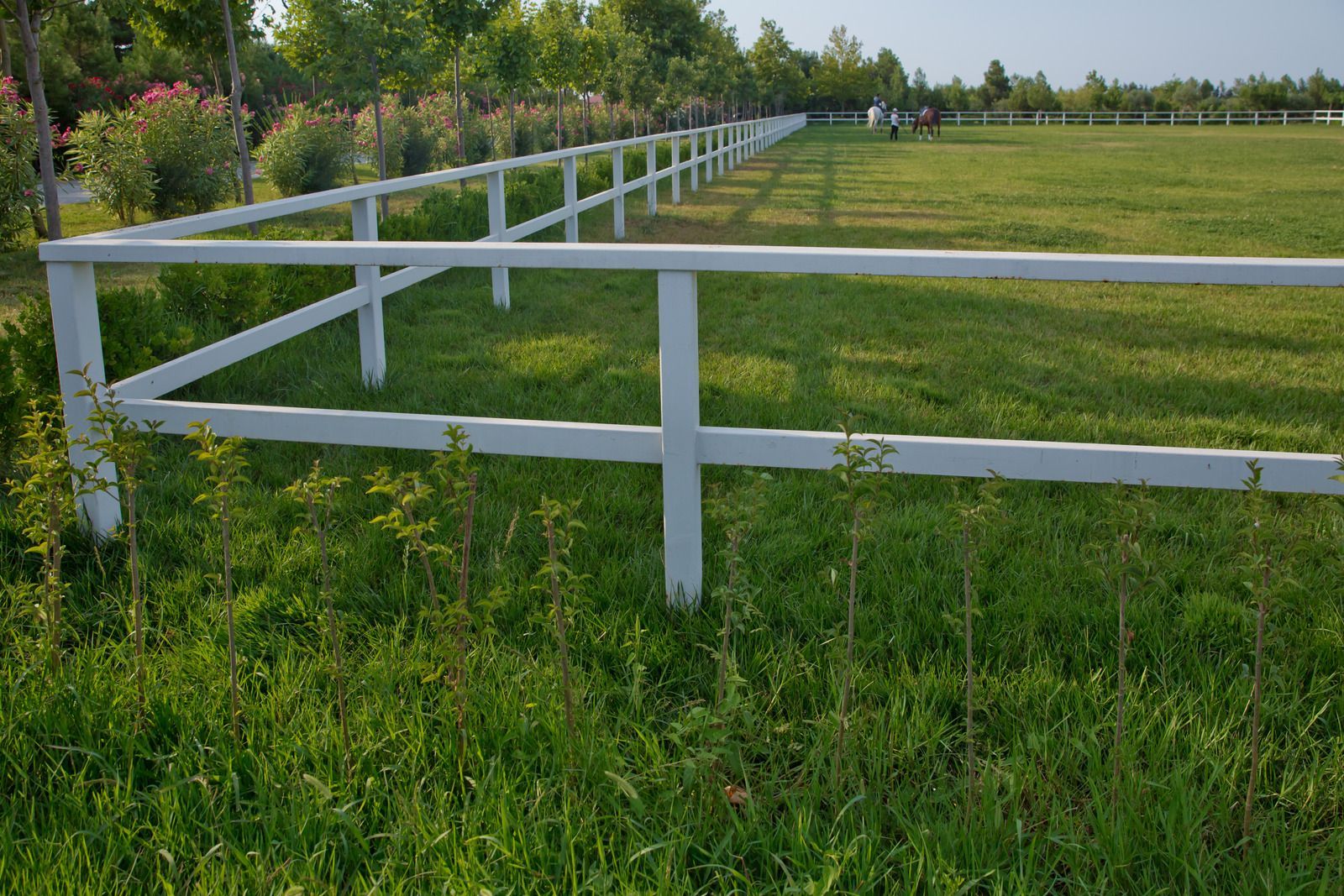
Paddock and Acreage Fencing
Long boundary and enclosure work for pasture, hobby farms, and large lots, laid out with proper corner and end bracing so the line holds its shape across considerable distances.
➜ THE WORD ON OUR WORK
WHAT OUR CLIENTS SAY.
Landowners tend to comment on two things: how quickly a long run went in, and how much the property looks like itself afterward. Several have had us back to extend the line as they cleared more ground.
➜ Common Questions
frequently asked questions.
Split rail questions are practical ones, mostly about configuration, containment, and how the fence handles animals and open ground. Here are the answers.
What is a split rail fence used for?
Marking boundaries, lining driveways, edging gardens, and enclosing pasture. It defines a property without blocking views, which makes it a longstanding favorite on acreage, rural lots, wooded parcels, and larger suburban properties where the outlook matters.
Should I choose two-rail or three-rail?
Two-rail fencing suits decorative boundaries, driveways, and garden edges. Three-rail adds height and containment for horses and larger dogs, and Lindley's Fencing installs both throughout Decatur, GA depending on what the boundary has to do.
How deep do split rail posts go?
Around 24 to 30 inches for most installations, deeper on corners, ends, and gate posts. Because rail fencing carries little wind load, it does not need the footing depth a solid privacy fence demands.
Will a split rail fence contain a dog?
Not on its own, since the gaps between rails are wide. Adding wire mesh to the inside face solves it completely while keeping the open rustic appearance from outside the property.
What wood is used for split rail fencing?
Pressure-treated pine is the common and economical choice, while cedar and black locust offer natural rot resistance and a finer appearance. All three weather to a soft gray if left unfinished.
How long does a split rail fence last?
Treated pine typically gives 15 to 20 years, with cedar and locust reaching longer. Lindley's Fencing has rail runs still standing around Decatur, GA decades after installation, helped by good drainage at every post.
Can wire mesh be added to an existing split rail fence?
Yes, and it is a straightforward retrofit. Mesh is stretched and fastened to the inside face of the rails, so the fence looks unchanged from the road while becoming genuinely stock-proof.
How far apart are split rail posts spaced?
Spacing is dictated by rail length, usually landing somewhere between 8 and 11 feet. Roots, rock, and grade sometimes force a shorter bay, and we adjust the layout so the variation stays unnoticeable.
➜ HOW WE WORK
FROM BOUNDARY WALK TO LAST RAIL, HERE IS HOW.
STEP 01
We Walk The Whole Boundary
Long runs need looking at end to end. We note grade changes, tree roots, wet ground, gate positions, and where the line meets a neighbor, all of which shape the layout and the material list.
STEP 02
We Settle Configuration And Timber
Two rail or three, treated pine or cedar, mesh backing or open. Each choice affects both cost and function, and we go through the trade-offs before anything gets ordered for the job.
STEP 03
We Set Out The Line
Corners are established first, then the run is strung so post positions land evenly. On rolling ground this is what keeps the finished line reading straight from a distance.
STEP 04
We Dig And Set The Posts
Holes go in to depth with drainage at the base, corners and gate posts are braced, and every post is checked against the string line before the rails go anywhere near it.
STEP 05
We Fit Rails, Mesh, And Gates
Rails are seated into the mortises along the run, mesh is stretched and fixed to the inside face where specified, and gates are hung and adjusted to swing clear of the ground.
STEP 06
We Check The Line And Clear Down
We sight the finished run from both ends, correct anything sitting proud, and remove all offcuts and spoil. On acreage that includes leaving access lanes and gateways clear for you.
➜ GET YOUR FREE ESTIMATE
LET US PRICE YOUR BOUNDARY, FREE.
Show us the ground and we will walk it, measure the run, and put a written price together covering the rail configuration, the timber choice, and mesh backing if containment matters to you. Long boundaries reward careful planning, and you will get an honest view of where a shorter run or a lighter specification would serve you just as well. The visit and the estimate cost nothing at all. Reach us through our contact page and we will arrange a time.
WHAT YOUR FREE ESTIMATE COVERS:
- A walk of the full boundary line
- Two-rail and three-rail compared
- Timber options and expected lifespans
- Mesh backing advice for containment
- A written price with no obligation
- Gate widths sized to your access